week 01
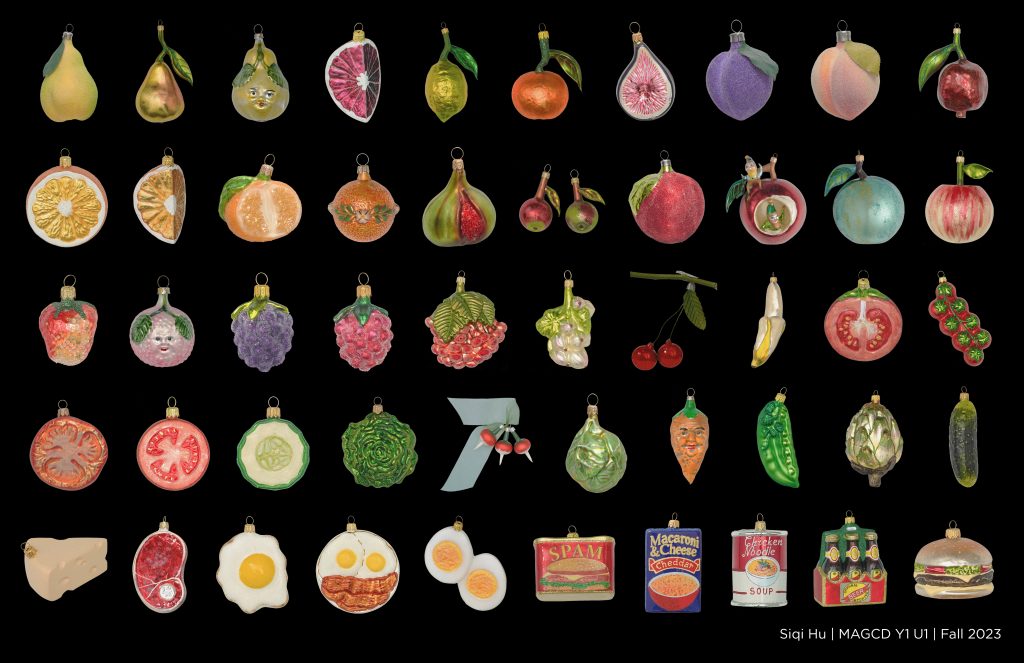
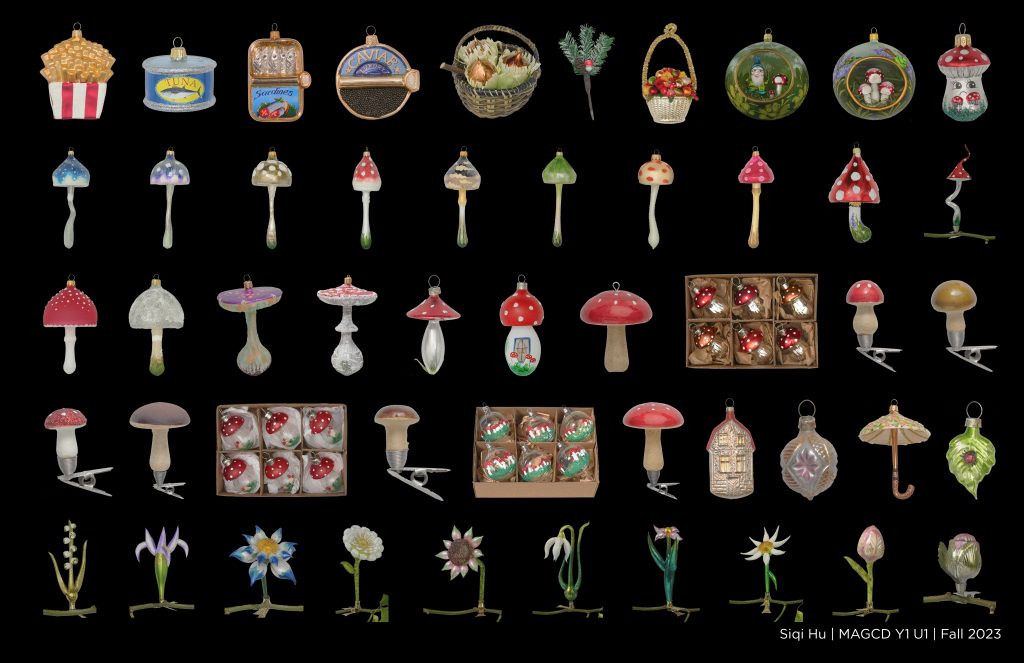
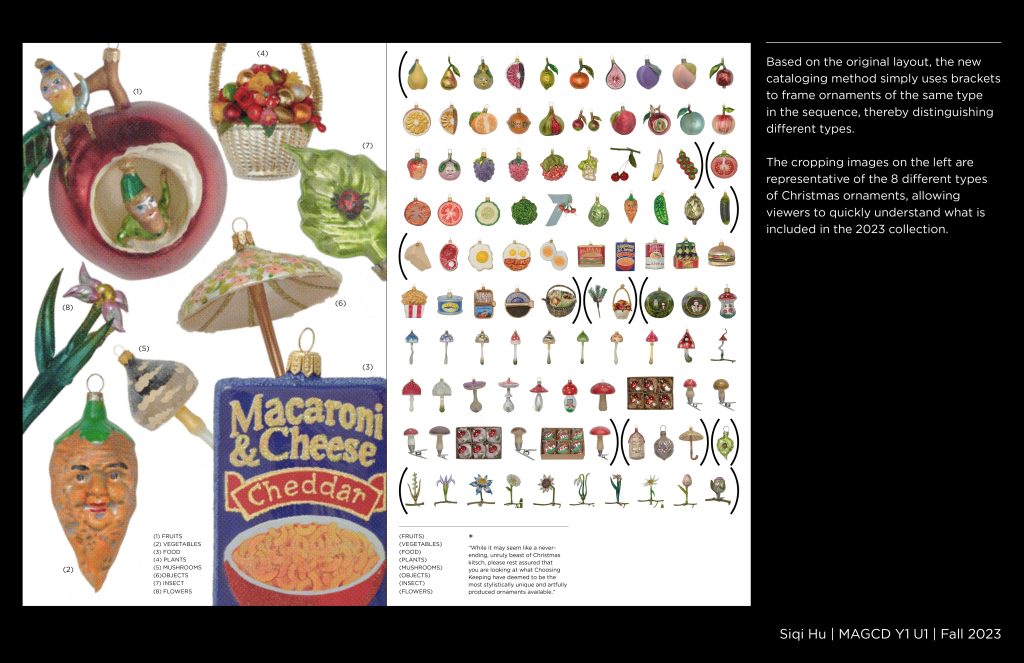
week 02
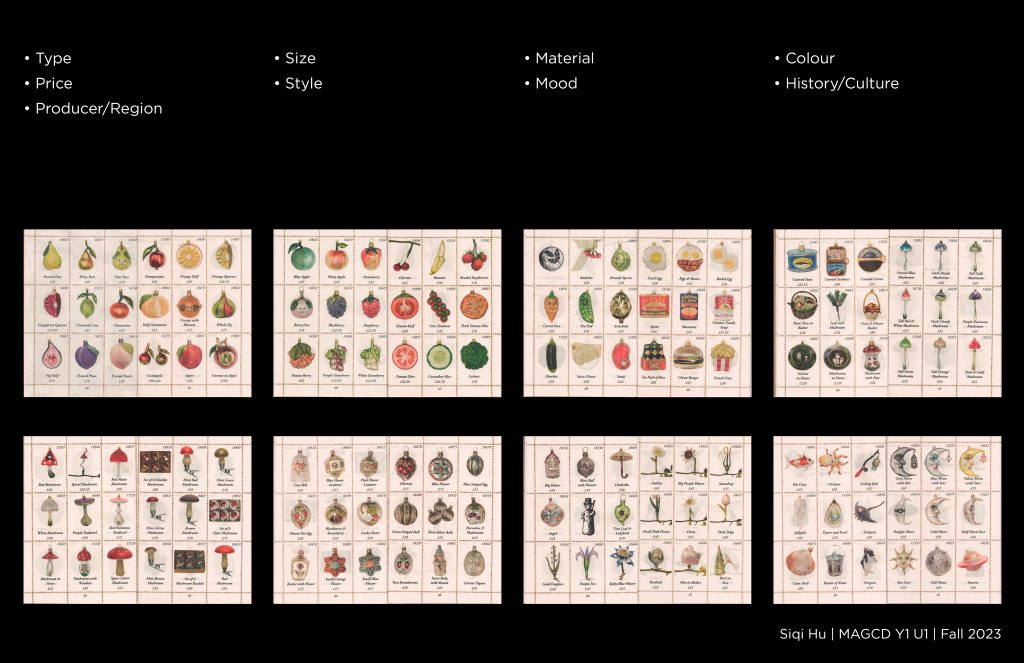
Based on last week’s feedback, and considering that two of the biggest characteristics of this Christmas catalogue are expensive and nostalgic, I wanted to use classification as the method to rethink the values of the ornaments.
This catalogue actually contains the interaction between two parties, one is the seller who conveys the information, and the other is the buyer who receive the information. I tried to analyze where value is reflected from both perspectives and extract and classify it.
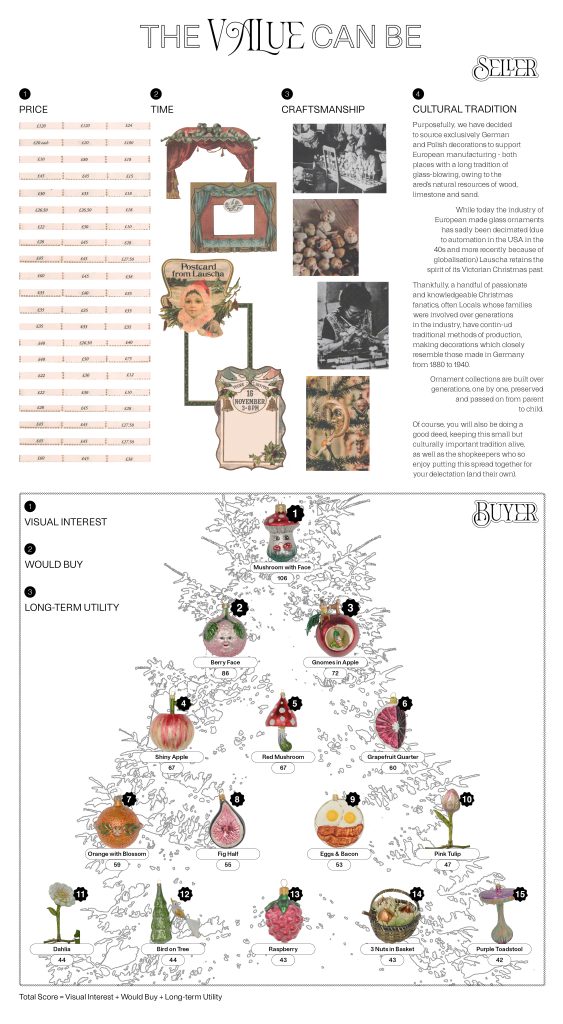
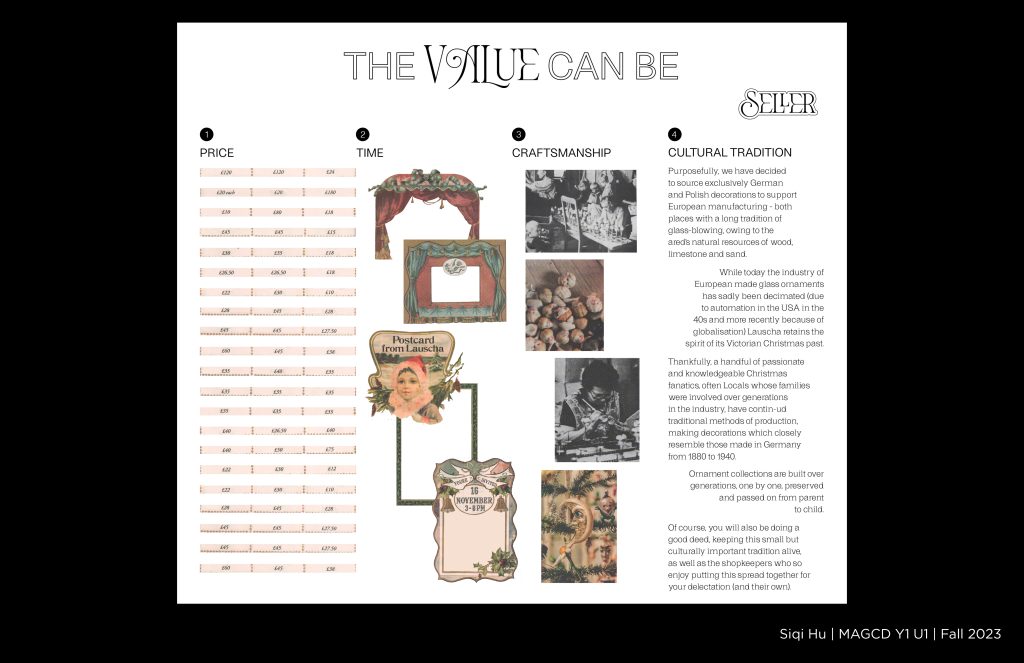
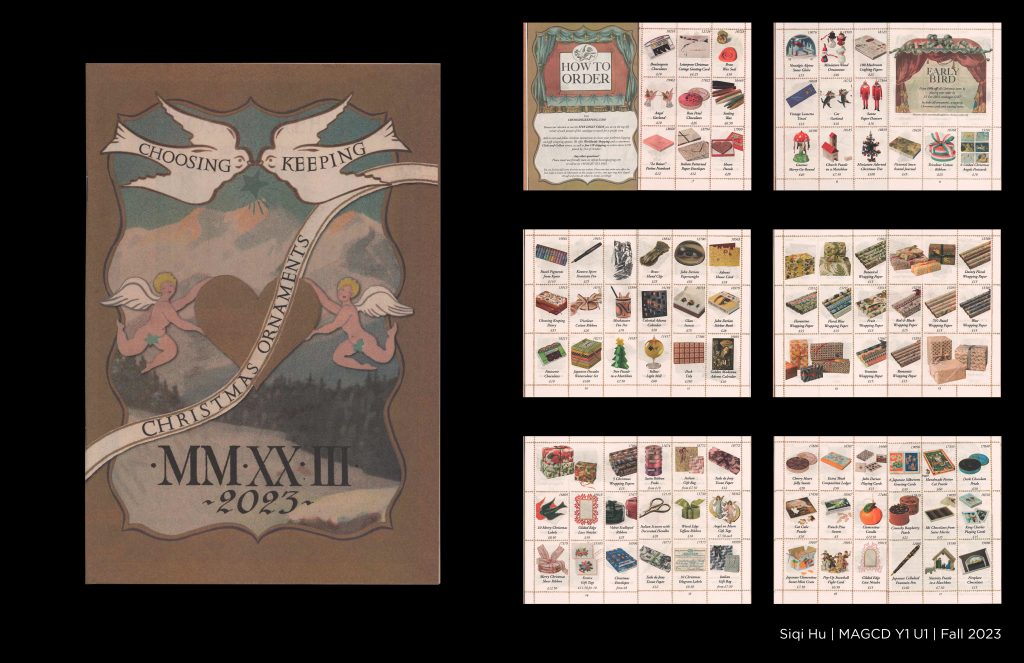
From the seller’s perspective, first, price is a value given by the seller to the product. Second, time. Apparently the seller believes that nostalgia is a highlight of the product, they suggest that embracing the glory found in passing times. Therefore, it is time that gives the product value, and the visual representation of time mainly comes from the patterns and frames in the catalog, so here’s a collection of time. Third, craftsmanship. Another emphasis in the catalog is that all ornaments are handmade by family-owned companies in Europe. The visual representations all come from photos, so photos are used as a medium to reflect the value as craftsmanship. Finally, the seller also believes that the value comes from cultural tradition. There is an article in the catalog that specifically introduces how hard the regions that produce these ornaments keep this culturally important tradition alive, and I excerpted the relevant text as a collection of cultural tradition.
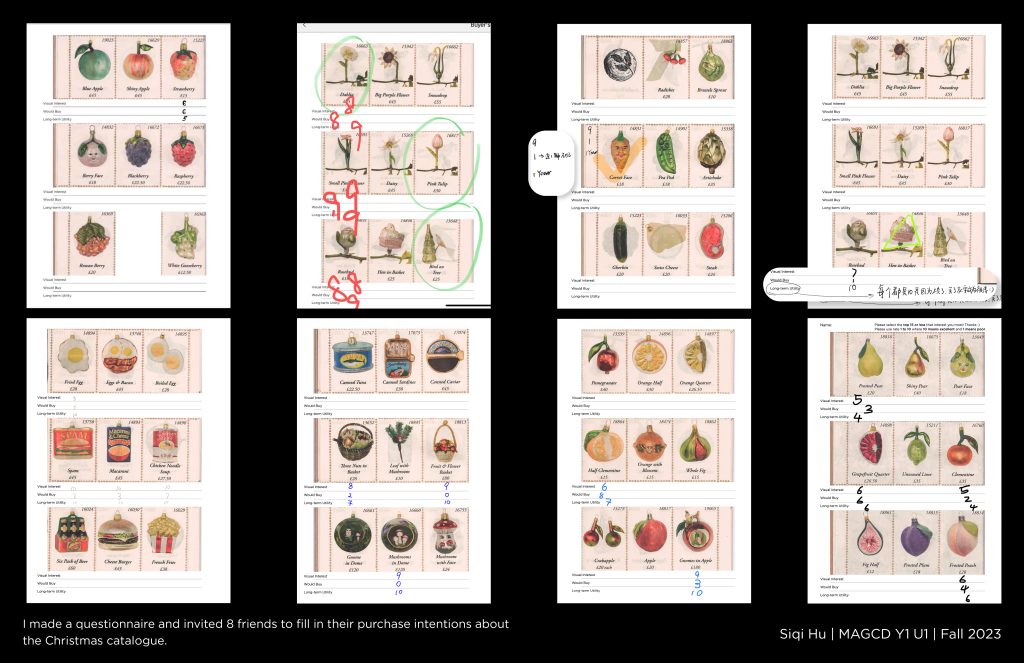
From buyer’s perspective, I made a questionnaire and invited 8 friends to fill in their purchase intentions about this Christmas catalogue. Before starting the survey, I asked people about their criteria for purchasing products. Generally speaking, buying criteria include price, appearance, quality, service, etc. And here I put three criteria to evaluate the value of these products, the first one is visual interest, and the second is would buy, which means ranking their desirability. The third criteria is long-term utility, which means whether you want to keep it for a long time and become a permanent collection, or just for this Christmas. People need to choose the 15 or less that they are most interested in from these 100 ornaments, and use rate 1 to 10 where 10 means excellent and 1 means poor.
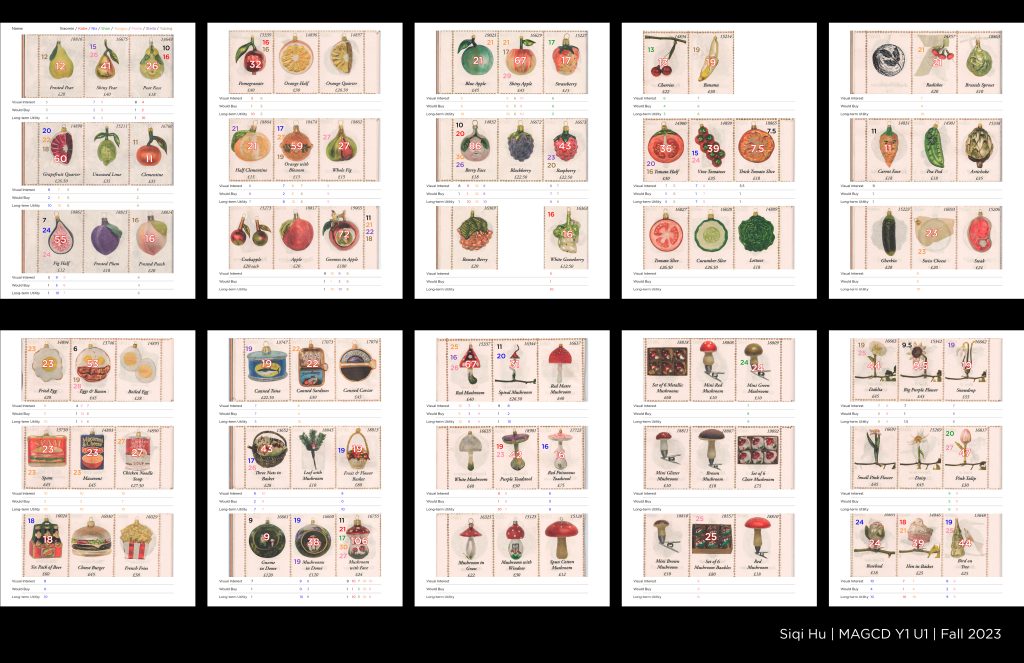
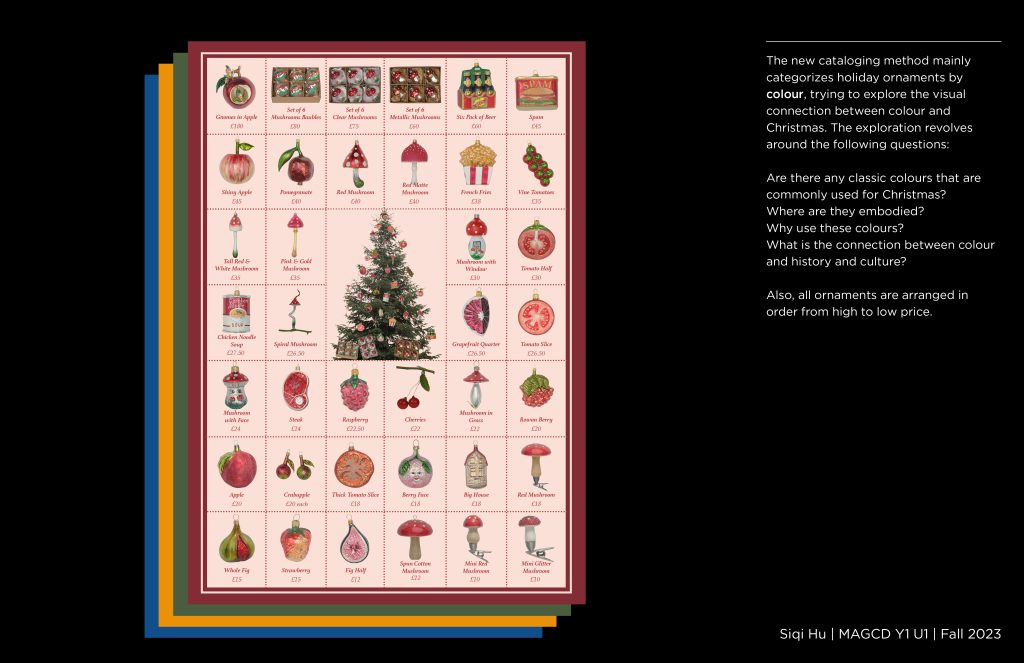
I collected many different but interesting results. For example, some people are passionate Christmas fanatics. They really support craftsmanship and think the price is worth it, so they are willing to buy a lot. Some people do admit the visual pleasure of these ornaments, but the price does not match its value, so they are reluctant to buy them. Some people even think that the price is too high, and if they are gonna buy it, they will definitely pass down through the generations. In addition, people’s preferences are completely different. Some people prefer fruits, some prefer mushrooms, and some prefer flowers. Interestingly, when I compiled the top 15 most popular decorations, most of them were in warm colors.
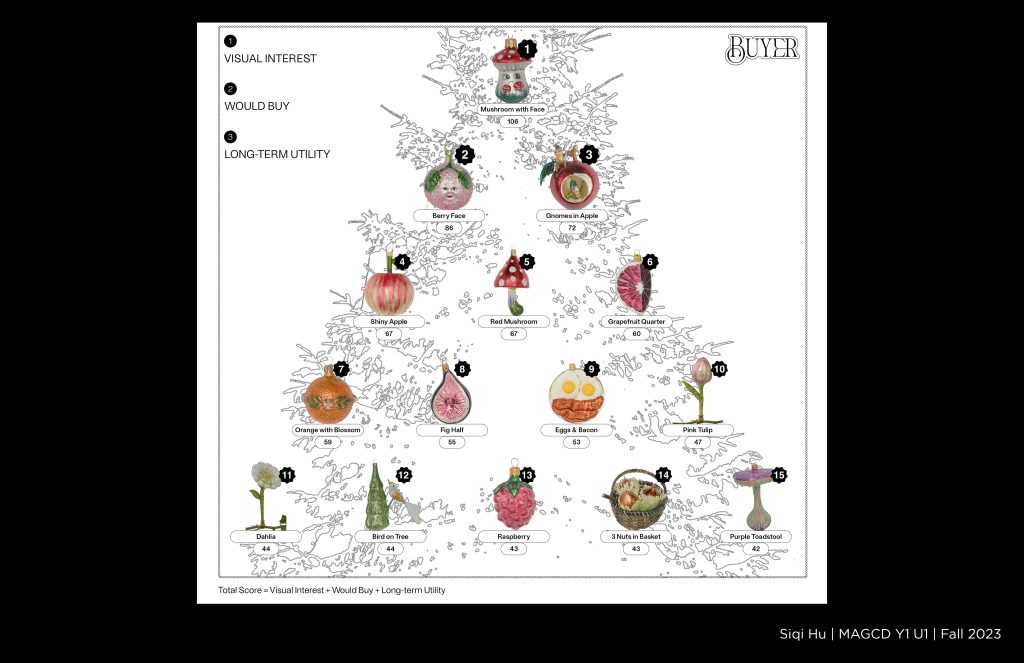
It intuitively shows that different definitions of the value of products have arisen between sellers and buyers.
But to a large extent, they are interacted to each other. The buyer’s desirability depends on the visual pleasure and price given by the seller, and the traditional Christmas spirit highlighted by the seller also affects people’s views and attitudes towards the products.